
- Find your disinfectant. Chlorine or chloramine. This decides everything else.
- Match the media to it. Chlorine is easy; chloramine needs a stage built for it.
- Check the build. Metal holds pressure and will not crack or leak the way thin plastic can.
- Mind the flow. A good filter should not turn your shower into a trickle.
- Add up the cartridge cost, not just the sticker price.
- Read the claims honestly. Overclaims are the clearest sign to walk away.
Searching for the "best shower filter" in Australia turns up a lot of ranked lists, and many of them rank whoever pays best. This guide does something more useful: it gives you the criteria to judge any filter yourself, in the order that actually matters. Get the first step right and the rest falls into place.
Step 1 - Find your disinfectant (this comes first for a reason)
Australian utilities use one of two disinfectants: free chlorine or chloramine. They behave differently and need different filter media. This single fact explains why two people buy the same filter and get completely different results. As a general pattern, Sydney, Brisbane, Adelaide, Perth and Darwin lean chloramine; Melbourne, Hobart and Canberra lean free chlorine - though it varies by retailer and suburb, including chloramine pockets in Melbourne's west. Confirm yours before anything else: Chloramine vs Chlorine: Which Does Your Australian City Use?
Step 2 - Match the media to your water
Free chlorine is the easy target - almost any carbon-based or KDF filter reduces it well. Chloramine is the hard one, and most cheap filters are not built for it. If your supply is chloramine, look for a filter with a stage aimed specifically at chloramine, whether that is Vitamin C or catalytic carbon, not just standard carbon. For what each media actually does, see What Each Shower Filter Media Stage Does and, on the chloramine question specifically, Vitamin C and Chloramine.
| If your water is... | You need... | Enough on its own? |
|---|---|---|
| Free chlorine | KDF and/or a carbon-based stage | Usually yes |
| Chloramine | A chloramine-focused stage (Vitamin C or catalytic carbon), layered with chlorine media | Chloramine is only ever helped-reduced at shower flow, not removed |
Step 3 - Check the build: metal vs plastic
Most shower filters are moulded plastic, and it is the most common source of complaints: cracking, leaking at the threads, and a housing that flexes under pressure. A metal housing does not have those failure modes. It holds full pressure, will not go brittle, and lasts across many cartridge changes. This is not just aesthetics - a filter that leaks or drops your pressure is a filter you stop using. If you are comparing two otherwise similar filters, the housing material is a real tiebreaker.
Step 4 - Mind the flow
A filter sits between your shower arm and your head, so a poorly designed one can choke your flow. Look for a housing engineered to hold pressure rather than restrict it. A filter that trades a good shower for filtered water rarely stays installed.
Step 5 - Add up the true cost
The sticker price is only part of it. What matters over a year is the cartridge: how long it lasts and what a replacement costs. A cheap filter with short-life, pricey cartridges can cost more over twelve months than a dearer one with sensible refills. Check the cartridge life, the replacement price, and whether refills are actually easy to buy.
Step 6 - Read the claims like a skeptic
How a filter talks about itself tells you a lot. A few honest red flags:
- "Removes 99% of chloramine" or any precise removal percentage for a shower - contact time does not support it.
- "NSF certified" with no detail - ask what is certified. Often it is one media component (NSF/ANSI 42), not the finished filter.
- Vague stage-count marketing - "15-stage mineral energy balls" - with no named media or quantity.
- Skin-condition or medical claims. A shower filter is not a treatment.
The filters worth trusting tend to say less, more precisely: which media, how much, what it reduces, and what it does not.
A quick checklist
| Criterion | What good looks like |
|---|---|
| Disinfectant match | Media chosen for your chlorine or chloramine supply |
| Media transparency | Named media and quantity, not vague "stages" |
| Build | Metal housing, holds pressure, no crack/leak history |
| Flow | Full pressure retained |
| Cartridge | Reasonable life, affordable refills, easy to buy |
| Claims | Accurate language - "reduces / helps reduce", no percentages or medical claims |
| Fit | Standard G½ fitting, tool-free install |
A filter built to these criteria
Eagle Reborn was designed around exactly this checklist: a machined anodised-aluminium housing that holds pressure and will not crack or leak; a four-stage cartridge that reduces chlorine and helps reduce chloramine, with the media and quantities stated plainly (130 grams, KDF-55 + calcium sulfite + Vitamin C + activated carbon); the KDF-55 media certified to NSF/ANSI 42; a standard G½ fitting and a tool-free, roughly 60-second install. And the claims are kept to what the chemistry supports - reduce chlorine, help reduce chloramine, nothing overstated.
Frequently asked questions
What is the best shower filter in Australia?
There is no single best - the right filter depends on your water. The most important step is matching the filter to your disinfectant (chlorine or chloramine), then judging build, flow, cartridge cost and honest claims.
Do shower filters actually work?
Yes, when the media matches your water. A carbon or KDF filter reduces free chlorine well. For chloramine, you need a filter with a stage built for it, and even then it helps reduce rather than removes at shower flow.
Are metal shower filters better than plastic?
For durability, yes. Plastic housings are the common source of cracking, leaks and pressure loss. A metal housing holds pressure and lasts across many cartridge changes, which is why build is a genuine buying criterion.
How much should a shower filter cost?
Judge it over a year, not on the sticker. A low upfront price with short-life, expensive cartridges can cost more than a dearer filter with sensible refills. Check cartridge life and replacement price.
Which shower filter is best for chloramine cities like Sydney or Perth?
One with a chloramine-focused stage - Vitamin C or catalytic carbon - layered with chlorine media. Standard carbon-only or basic KDF filters are built for free chlorine and underperform on chloramine.
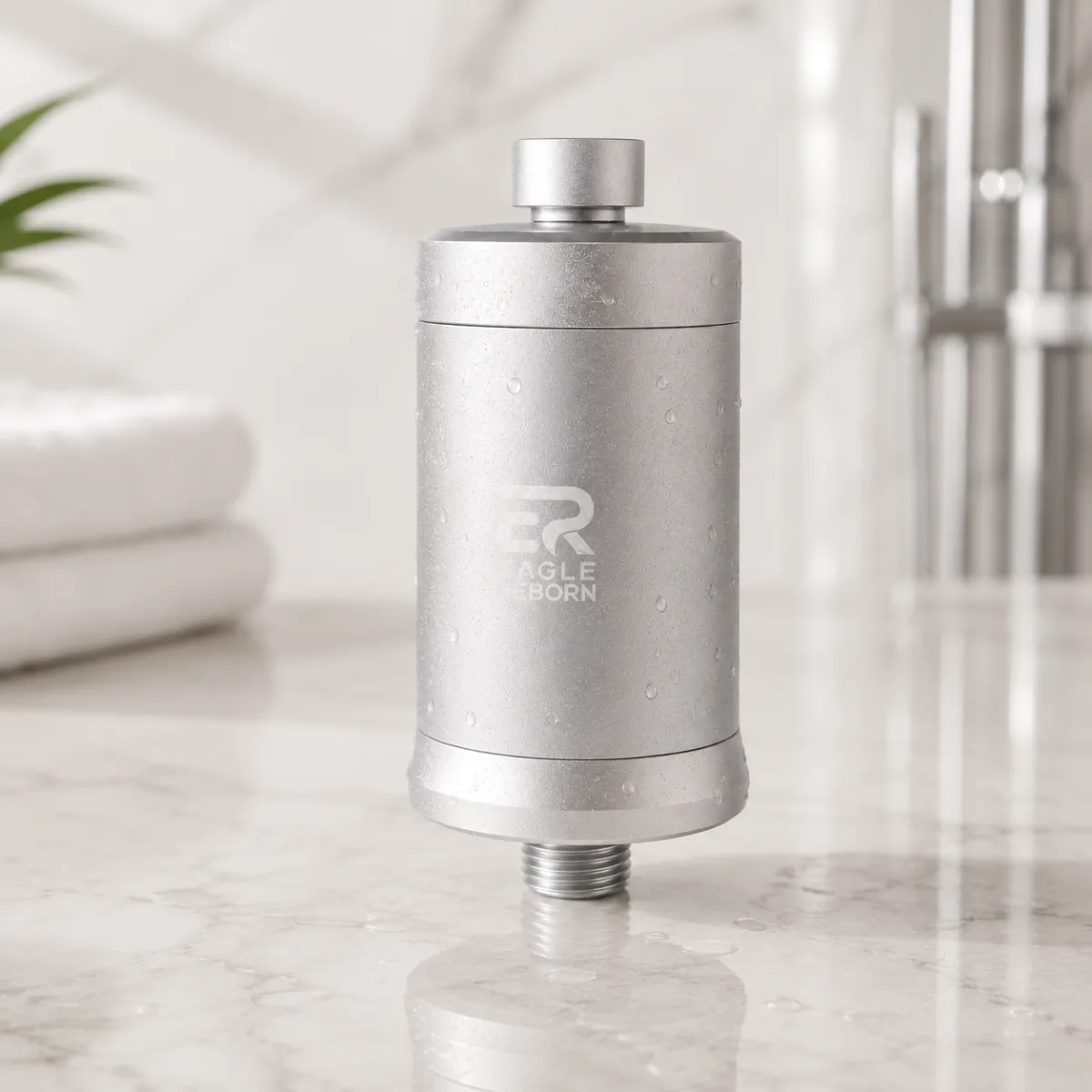
The Eagle Reborn shower filter
Anodised aluminium, four-stage layered media, full pressure retained. Designed in Australia.
Book yours nowBook now